
For a long time, international policy was primarily associated with diplomacy, cooperation, and intergovernmental relations. Quebec’s new International Policy 2026 reflects a more profound transformation: in a context marked by geopolitical tensions, the energy transition, and the reorganization of global value chains, international issues are now closely linked to infrastructure, trade corridors, and economic competitiveness.
This evolution aligns directly with several of the GVCdtLab’s research areas, notably its work on the St. Lawrence–Great Lakes corridor, global value chains, and digital tools that enable a better understanding of economic flows.
International trade does not rely solely on trade agreements. It also depends on the ability of infrastructure to effectively connect markets. Indeed, Quebec’s new International Policy 2026 reflects a significant shift in how governments view their presence on the global stage. Although the Quebec government’s official document addresses diplomacy, trade, investment, and international cooperation, one theme recurs consistently: the importance of infrastructure that facilitates the flow of goods, energy, resources, and information.
This perspective reflects a broader transformation of the global economy. For several decades, international competitiveness relied primarily on open markets and the reduction of trade barriers. Today, against a backdrop of geopolitical tensions, supply chain disruptions, and challenges related to the energy transition, the ability to effectively connect regions has once again become a strategic advantage.
Transportation infrastructure, energy networks, ports, trade corridors, and logistics hubs are no longer merely supports for economic activity. They are now strategic assets that directly influence the resilience and competitiveness of economies.
This reality is reflected in several aspects of Quebec’s policy. Whether the goal is to strengthen ties with Europe, diversify trade in the Indo-Pacific, develop new partnerships in Africa, or support sectors related to critical minerals, these ambitions all depend on Quebec’s ability to integrate into efficient international transportation and trade networks.
The St. Lawrence–Great Lakes Corridor as a Strategic Asset
One of the most significant messages of Quebec’s International Policy 2026 lies in the province’s stated commitment to diversifying its economic relations. In particular, the document emphasizes strengthening ties with Europe, expanding trade in the Indo-Pacific, and increasing engagement in Africa and the Middle East. These priorities reflect a desire to expand economic partnerships and reduce the vulnerabilities associated with excessive market concentration.
However, trade diversification cannot be achieved solely by signing agreements or opening new diplomatic missions abroad. It also depends on the capacity of infrastructure to effectively support the movement of goods between regions.
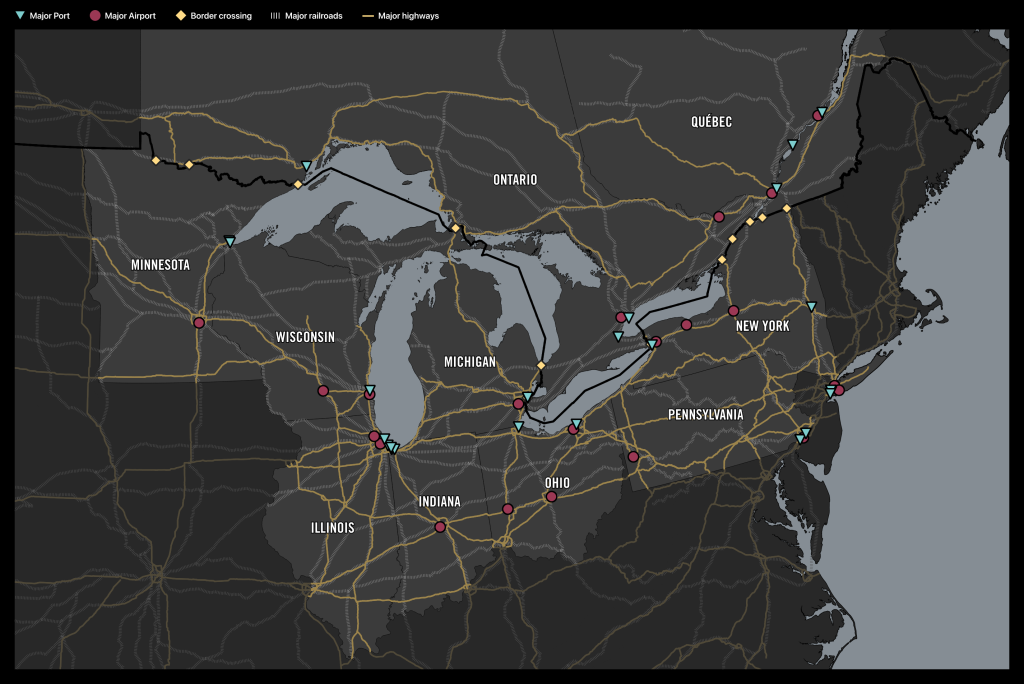
Every export to Europe, every new trade relationship with Africa, and every business opportunity in the Indo-Pacific depends on complex transportation, logistics, and distribution networks. In this context, the St. Lawrence–Great Lakes corridor serves as one of the main links between Quebec’s economy, the North American market, and international markets.
Often viewed as a regional infrastructure, the corridor actually plays a much broader role. It connects North America’s industrial and manufacturing heartland to global maritime networks, facilitating the flow of raw materials, manufactured goods, energy resources, and intermediate goods that are essential to contemporary value chains. This function becomes particularly important in a context where countries are seeking to strengthen their economic resilience, secure their supplies, and diversify their trade markets. A region’s ability to participate effectively in global value chains now depends as much on its geographic location as on the performance of the infrastructure connecting it to the rest of the world.
The GVCdtLab’s work highlights this reality by analyzing the St. Lawrence–Great Lakes corridor as an integrated system in which ports, transportation networks, industrial centers, and trade flows interact. This approach goes beyond a purely territorial perspective to view the corridor as a strategic platform for economic connectivity. In light of Quebec’s new International Policy, the corridor thus emerges not only as a transportation route but also as a driver of competitiveness. Its ability to support exports, connect businesses to international markets, and facilitate Quebec’s integration into global value chains directly contributes to the achievement of the province’s economic objectives.
In a global economy increasingly structured around flows, networks, and interdependencies, connectivity infrastructure is becoming a strategic asset. The St. Lawrence–Great Lakes Corridor is one of the most concrete examples of this for Quebec.
(Image from the Digital Twin, GVCdtLab)
Diversify partners, strengthen networks
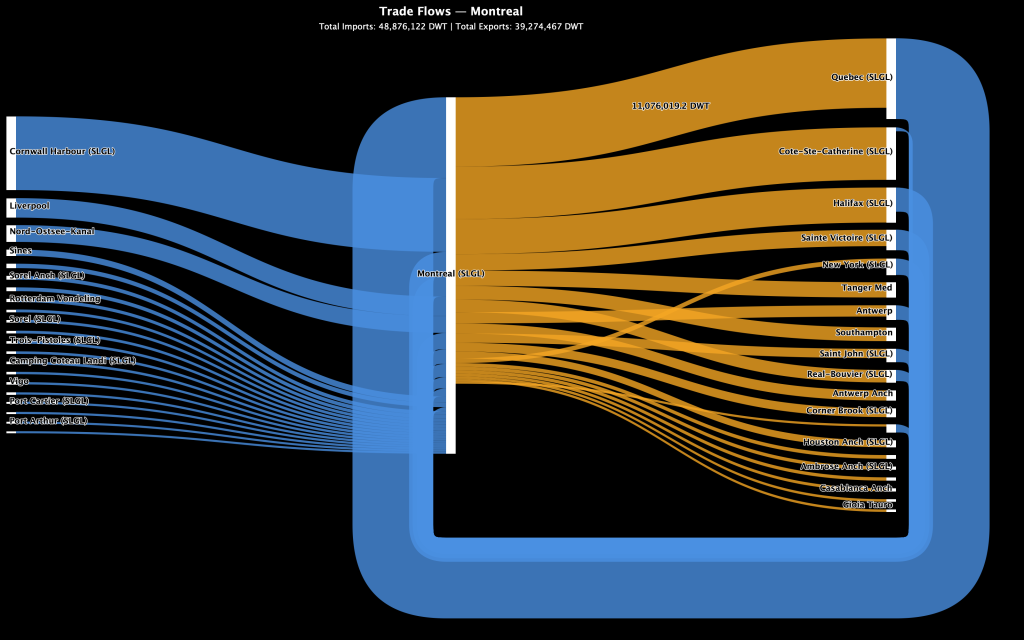
One of the guiding principles of Quebec’s International Policy 2026 is the commitment to diversify the province’s economic relations. The document emphasizes strengthening ties with Europe, deepening relations in the Indo-Pacific, increasing its presence in Africa, and maintaining economic relations with major partners such as India and China. This approach reflects an increasingly prevalent reality in the global economy: diversifying trade partners has become a key factor in resilience.
For a long time, economic integration relied primarily on deepening trade with a limited number of key partners. Today, businesses and governments are increasingly seeking to spread their risks, expand their markets, and strengthen their ability to adapt to changes in global trade. From this perspective, diversification is not simply a matter of exporting to more countries. It also involves building more robust economic networks capable of sustaining trade despite disruptions that may affect certain regions and sectors.
This logic is particularly important for an open economy like Quebec’s. Exports, investments, and supply chains that underpin the province’s economic activity rely on a complex network of international relationships that extend far beyond North American borders. Decisions made in Brussels, New Delhi, Beijing, or Dakar can thus have tangible repercussions on Quebec’s businesses, infrastructure, and industrial sectors. Diversifying partners also helps expand opportunities for integration into global value chains. Each new market represents not only a potential outlet for exporters but also a gateway to new networks of suppliers, investors, research centers, and industrial partners.
This approach aligns with several of the issues studied by the GVCdtLab regarding economic interdependencies and the structure of international trade networks. Contemporary value chains are not limited to bilateral relationships between countries; rather, they take the form of complex systems in which flows of goods, capital, technology, and knowledge circulate among multiple actors spread across the globe.
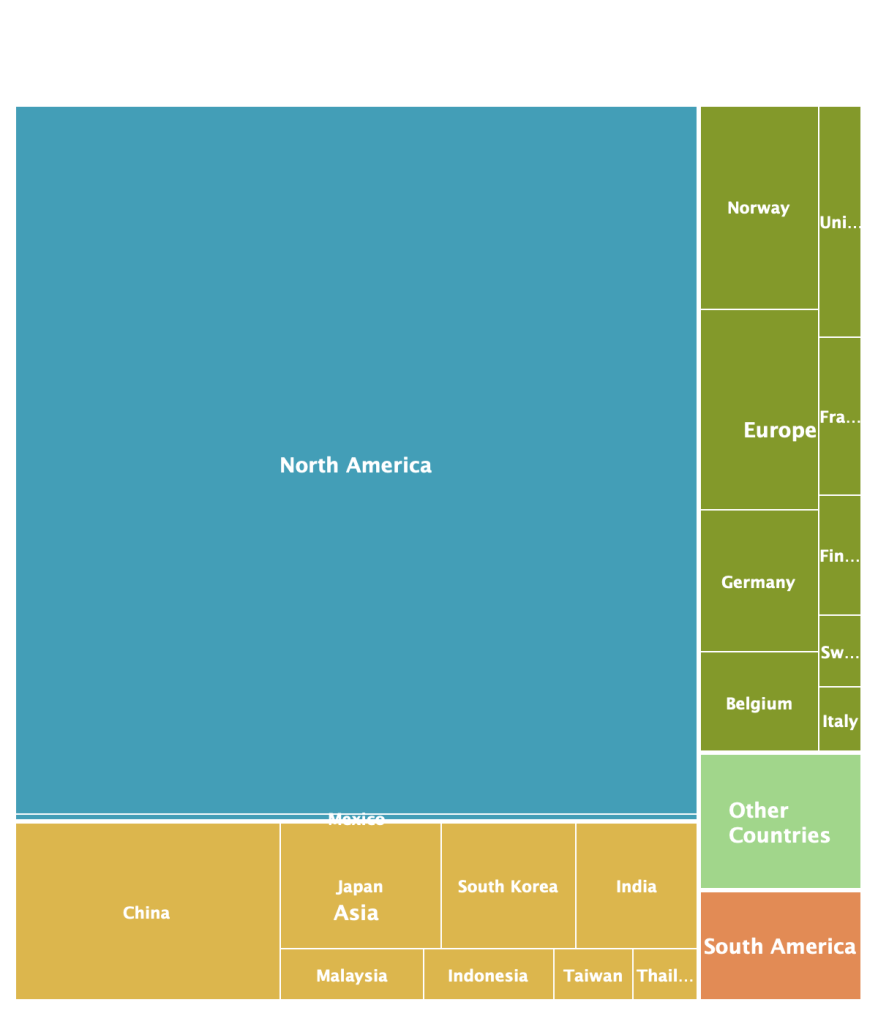
In this context, the ability to understand the relationships between markets becomes just as important as the ability to measure trade itself. Mapping export destinations, identifying concentrations of trading partners, and analyzing sectoral dependencies provide a better understanding of the opportunities and vulnerabilities associated with Quebec’s international integration.
Quebec’s International Policy 2026 thus proposes a vision of economic development based not only on market access, but also on the quality and diversity of the networks that connect Quebec to the global economy. The more diversified these networks are, the more they help strengthen the province’s adaptability and competitiveness in a constantly evolving international environment.
(Image from the Digital Twin, GVCdtLab)
Critical minerals and the energy transition
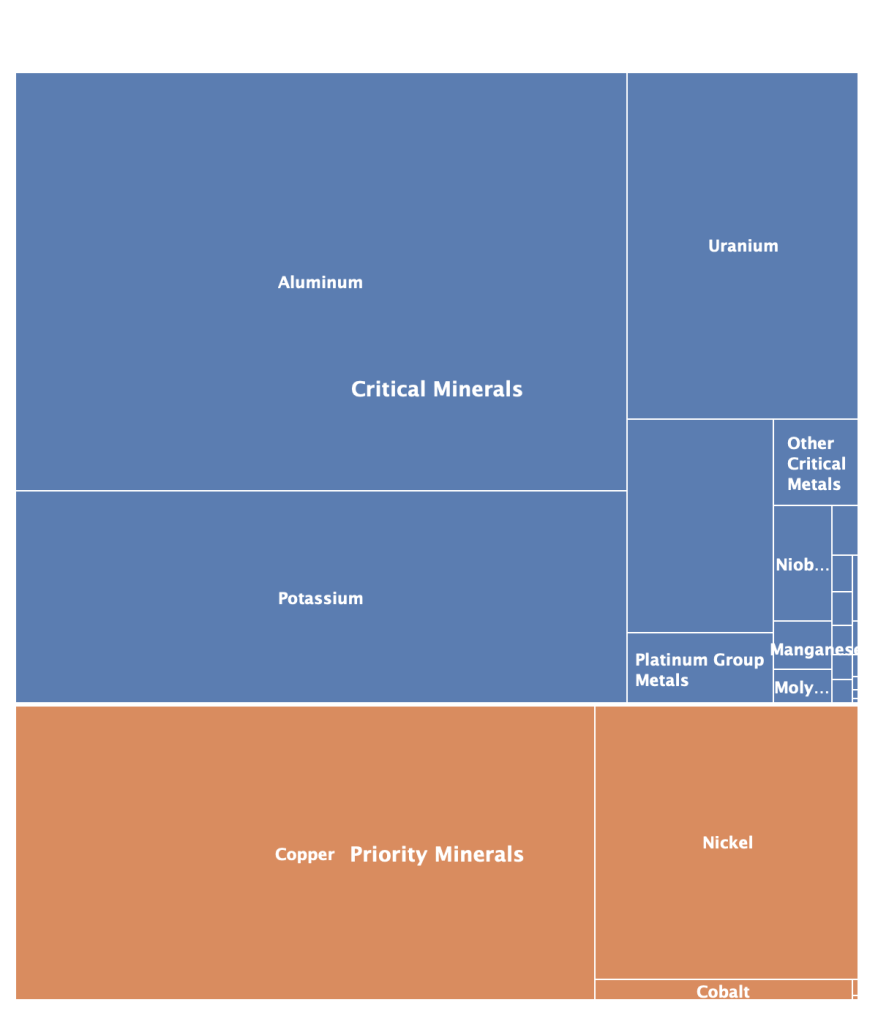
Quebec’s International Policies 2026 places significant emphasis on sectors related to the energy transition, industrial innovation, and strategic resources. Among these priorities are critical and strategic minerals, whose importance continues to grow as economies accelerate their transition to lower-carbon technologies.
This focus reflects a major transformation of the global economy. The resources needed to manufacture batteries, electric vehicles, energy infrastructure, and digital technologies now occupy a central position in the economic development strategies of many countries.
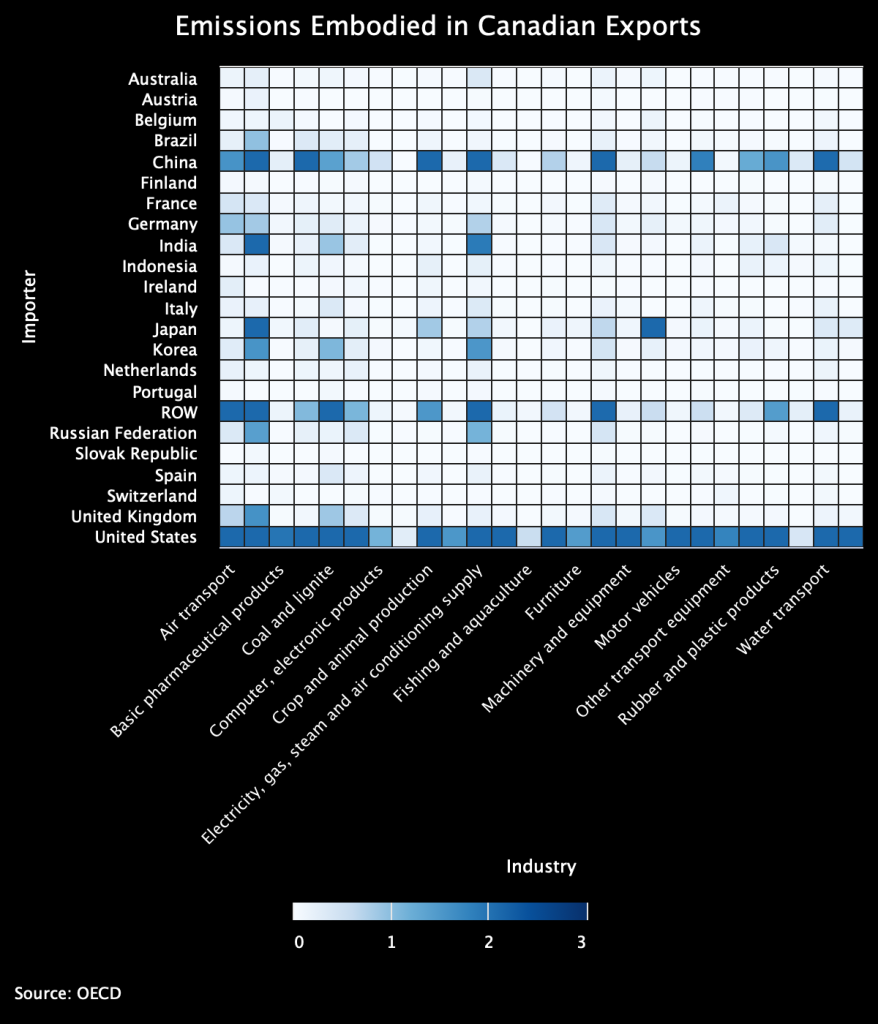
However, the issue goes far beyond the mere availability of resources. The competitiveness of sectors linked to the energy transition also depends on the ability to extract, process, transport, and integrate these resources into complex value chains that span multiple territories and continents. From this perspective, critical minerals are a particularly telling example of these new economic interdependencies. Between the extraction site and the final product lie a multitude of actors, infrastructure, and logistics networks that determine where value is created, transformed, and distributed. This reality raises several questions that are directly relevant to the work of the GVCdtLab. Which trade corridors support the development of these new industrial sectors? Which ports play a central role in the flow of strategic resources? How do transportation networks influence the competitiveness of the regions participating in these value chains?
Analyzing these flows is particularly important in the Quebec context. The development of critical resources does not affect only the regions where they are extracted. It also involves transportation infrastructure, port facilities, industrial centers, and export markets, which ensure that these resources are integrated into the global economy. This approach allows us to move beyond a sectoral view of the energy transition and instead consider it as a system of connections between regions. The regions that benefit most from this transformation are not necessarily those with the most abundant resources, but often those that occupy a strategic position within the networks that enable the flow and processing of these resources.
In this regard, the tools developed by the GVCdtLab offer particularly relevant insights for understanding the economic geography of the energy transition. By mapping the flow of goods, transportation infrastructure, and relationships between regions, it becomes possible to observe how new industrial sectors fit into existing value chains and help reshape the economic networks of the St. Lawrence–Great Lakes region. Quebec’s International Policy thus highlights a broader trend: the energy transition does not rely solely on technological innovation or natural resources. It also depends on the ability of regions to connect effectively to the economic networks that will shape the value chains of the future.
(Image from the Digital Twin, GVCdtLab)
(Images from the Digital Twin, GVCdtLab)
Conclusion
Quebec’s International Policy 2026 reflects a profound transformation of the global economic environment. International issues are no longer confined to diplomatic relations or traditional trade. They now concern the ability of territories to integrate into complex networks of production, transport, innovation and the flow of resources. Through its priorities relating to market diversification, strategic infrastructure, critical minerals and the energy transition, the document highlights a fundamental reality: the competitiveness of an economy depends increasingly on its position within global value chains and the networks that underpin them.
In this context, trade corridors emerge as essential infrastructure for economic connectivity. The St Lawrence–Great Lakes corridor is a particularly telling example of this. Far beyond its logistical function, it links markets, industrial sectors, innovation hubs and regions whose interactions shape a significant part of the North American economy. Understanding these dynamics, however, requires moving beyond traditional approaches based on administrative boundaries or aggregated statistics. Contemporary issues unfold through flows, networks and interdependencies that call for new tools for analysis and visualisation.
It is precisely within this framework that the work of the GVCdtLab is carried out. By developing a digital twin of the St Lawrence–Great Lakes corridor, the laboratory helps to highlight the interconnections between infrastructure, territories, value chains and trading partners. These tools not only provide a better understanding of the transformations currently underway, but also enable us to explore the opportunities and vulnerabilities that will accompany the evolution of the global economy in the years to come.
As value chains are reorganised, corridors gain strategic importance, and the energy and digital transitions reshape economic flows, the ability to analyse these interdependencies is itself becoming a strategic advantage. More than just a visualisation tool, the digital twin thus offers a new way of understanding Québec’s place in a global economy undergoing profound restructuring.