*

Explainer


  • Batteries for EVs: A supply chain perspective

    Batteries for EVs: A supply chain perspective

    Event

    Batteries for EVs: A supply chain perspective

    The world is undergoing a transition to a net-zero economy with technological development driving this change. Energy generation and transportation have received great attention as they together account for about half of global greenhouse gas emissions1. In terms of CO2 emissions, transportation generates one-fifth of the total, with 75% of that coming from road vehicles2. This makes electric vehicles (EVs) instrumental in reducing the overall environmental impact generated from road transportation. To support the expected increase in demand for EVs, the supply chain needs to be strong and resilient to exogenous shocks.

    From a technological perspective, EVs are simpler in design compared to their internal combustion engine counterparts, with significantly fewer moving parts. However, they require substantially more mineral resources for their motors and batteries. For automakers, batteries present a key technological challenge as their design shapes the key characteristics of the vehicle and determines the minerals required to manufacture it.

    At present, mineral-intensive lithium-ion batteries are the industry standard. Focused R&D efforts have led to an increase in battery density, longer cycle life and reduced average costs, falling by 90% since 20103. Yet, the cost of the battery pack is by far the most expensive manufacturing expense of an EV. On an average this cost was estimated to be at $6,300 in 20214, representing one-third of the total vehicle cost5. To better understand the economic dynamics behind this, it is imperative to understand the structure of a lithium-ion battery.

    Each EV houses a battery pack comprising multiple battery cells and control electronics within an aluminium or steel casing for protection. A battery cell contains two electrodes — a cathode and an anode — separated by a plastic separator. A lithium salt solution facilitates the movement of ions between the electrodes, with current collectors made of aluminum and copper for the cathode and anode, respectively, collecting and conducting electrical current. The chemistry of the electrodes principally affects the battery’s characteristics, including energy density, charging speed, lifespan, operating temperature, flammability and cost.

    The chart below shows the varying proportions of minerals used in the three leading lithium-ion battery chemistries. Automakers choose a chemistry that best serves the EV’s intended purpose. For instance, NMC batteries are used for high-performance EVs for their superior energy density, despite their higher costs. In contrast, LFP batteries, which have nearly half the energy density, are preferred for entry-level EVs due to their lower cost and longer lifespan.


    Regardless of their chemistry, lithium-ion batteries have a long and complicated supply chain involving globally dispersed actors performing specialized activities from mining to the their integration into EVs. The decentralized nature of these activities, coupled with the diversity in mineral inputs results in extensive international transportation. Minerals travel an estimated average of 50,000 miles from mining sites to their use into cell manufacturing6. To put this into perspective, the EV battery supply chain can be divided into three main stages: upstream, midstream, and downstream.

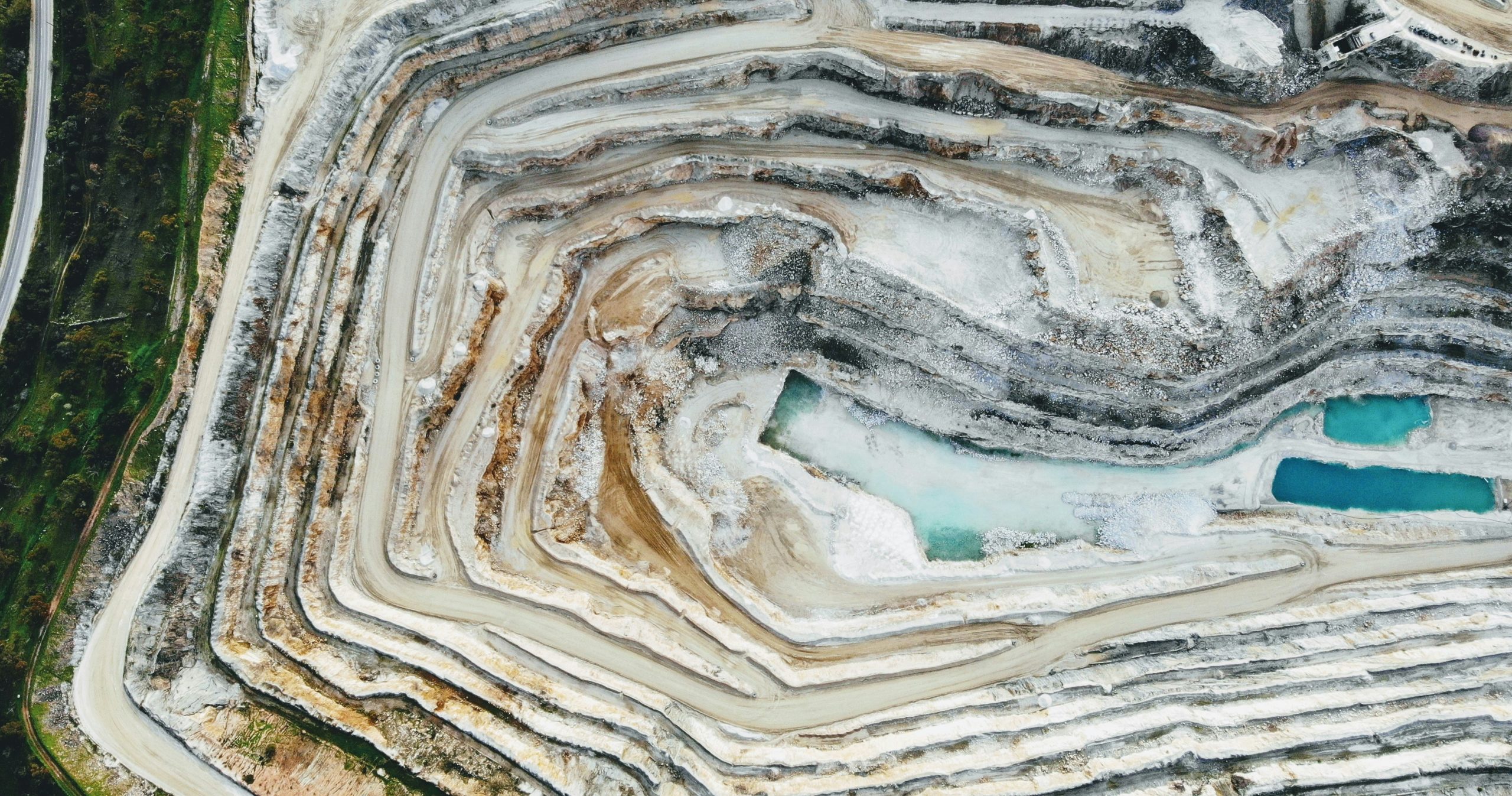
    The upstream stage involves mining the mineral ores necessary for creating battery components from reserves. While the specific minerals required depend on the battery chemistry, critical minerals like graphite and lithium are essential. The midstream stage involves processing mined mineral ores, refining them to battery-grade quality, converting them into components and then into battery cells by their manufacturers. In the downstream stage, these cells are assembled into large battery packs, integrated with control electronics and installed into EVs. Finally, at the end of its life, the battery ideally undergoes recycling, where its minerals are recovered and recycled to create new batteries7.

    Although a large majority of batteries are not currently recycled, there is significant potential for improvement. Reusing minerals to manufacture new batteries saves the energy expended on mining for virgin minerals and enables companies to mitigate challenges further upstream8. Additionally, dampening demand for critical minerals like cobalt also reduces environmental and social impacts, such as hazardous working conditions and issues like child and forced labor9.


    The interactive chart below shows the top 5 producers of the minerals typically used in EV batteries, with anodes on the left and cathodes on the right. Except for steel, every mineral used is classified as critical — essential for economic or national security, with supply chains vulnerable to disruptions — in Canada10. While the dataset used does not specify the grade of the minerals, which is important, it still highlights the uneven distribution and production of these minerals. This is particularly evident in the production of graphite, lithium, cobalt, phosphate and aluminum, where a single country often controls the majority of supply.

    A second drawback of the dataset is that it does not identify foreign ownership of mines, such as the Tenke Fungurume Mining (TFM) copper-cobalt ore project in Congo, where China holds an 80% equity stake11.

    Economically viable reserves of these minerals are often concentrated in the hands of a few suppliers in politically unstable countries with poor records of upholding human rights and environmental standards. For countries seeking to diversify their supply, opportunities for certain minerals exist but establishing new mines can be a lengthy process. For instance, approximately 20% of the world's lithium reserves are located outside the top 5 producers, offering potential for supply diversification. A similar situation exists for phosphate, with significant reserves found in Morocco. However, igneous phosphate, which is most suitable for LFP batteries, is primarily found in Canada, Russia, and South Africa12.

    On the flip side, battery chemistries and designs are continually evolving. In lithium-ion batteries, anodes are typically graphite, while cathode chemistry varies widely. LFP batteries, which avoid the use of nickel, manganese and cobalt, are gaining market share due to improvements in energy density and performance. However, for countries seeking to de-risk their EV battery supply chain, China also leads in the development and manufacture of LFP batteries, controlling over 95% of global production13. With widespread adoption in the Chinese market, 4 in 10 EVs produced in 2023 were powered by an LFP battery. Another potential disruption could come from sodium-ion batteries, which avoid the use of lithium in favor of nickel or manganese, depending on the chemistry14.


    Looking further downstream, China's dominant position in the EV battery supply chain becomes more apparent. While mineral extraction is somewhat geographically diversified, the processing of these minerals into materials suitable for battery parts is highly concentrated in China. More than 50% of graphite, lithium, manganese, cobalt and aluminum processing occurs there. This trend continues in cell manufacturing, with China producing approximately 70% of all cathodes and about 85% of all anodes. The conversion of cells into battery packs is also heavily concentrated in China, accounting for over 75% of global production. Finally, China manufactures approximately 1 in every 2 EVs produced worldwide.

    As broader geopolitical issues affect economic and trade relationships, the stability of global supply chains is increasingly at risk when an outsized share of any activity in the EV battery supply chain occurs in a single country. Such bottlenecks can have negative consequences as countries increasingly weaponize their control over key activities in the supply chains of critical goods15.


    To reduce the risks generated from over-reliance and to build resilience, investments are being made in Canada, the US and Europe across the EV battery supply chain to localize and develop domestic capacity, which is crucial for a successful green transition. Furthermore, the environmental and social impacts of upstream activities in the EV battery supply chain have spurred interest in securing ethical supplies. Greater investments are needed to ensure transparency and prevent malpractices by suppliers.

    The shorter than expected lifespan of batteries and the challenge of achieving circularity through recycling are also significant issues that need to be addressed. While experimentation with battery chemistry has enabled LFP technology to regain competitiveness, the lack of valuable minerals makes their recycling unprofitable16. In the mean time, due to the nature of the industry, EV battery production is expected to remain dominated by China for the foreseeable future.


    References

    1. Ritchie, Rosado and Roser (2020). Breakdown of carbon dioxide, methane and nitrous oxide emissions by sector. Our World in Data.

    2. Ritchie (2020). Cars, planes, trains: where do CO₂ emissions from transport come from?. Our World in Data.

    3. IEA (2024). Batteries and Secure Energy Transitions.

    4. Stinger and Park (2021). Why an Electric Car Battery Is So Expensive, For Now. Bloomberg.

    5. König et al. (2021). An Overview of Parameter and Cost for Battery Electric Vehicles. World Electric Vehicle Journal.

    6. Straubel (2022). The scope and scale of critical mineral demand and recycling of critical minerals. U.S. Senate Committee on Energy and Natural Resources.

    7. Brinn (2022). Electric Vehicle Battery Supply Chains: The Basics. NRDC.

    8. Reinsch et al. (2024). Friendshoring the Lithium-Ion Battery Supply Chain: Battery Cell Manufacturing. CSIS.

    9. Carreon (2023). The EV Battery Supply Chain Explained. RMI.

    10. Government of Canada (n.d.). Canada's critical minerals.

    11. Tang and Chen (2023). China's CMOC, Gécamines reach resolution on DR Congo copper-cobalt mine. S&P Global.

    12. Banerjee (2023). Characterization of First Phosphate’s Lac à l'Orignal Phosphate Deposit, Lac- Saint-Jean Anorthosite (LSJA) Complex, Quebec, Canada: Implications for Supplying Lithium Ferro (Iron) Phosphate (LFP) Batteries. Queen's University.

    13. IEA (2024). Batteries and Secure Energy Transitions.

    14. IEA (2024). Trends in electric vehicle batteries.

    15. Luo and Van Assche (2023). The rise of techno-geopolitical uncertainty: Implications of the United States CHIPS and Science Act. Journal of International Business Studies.

    16. IEA (2022). Global Supply Chains of EV Batteries.

    Speaker(s)

    • Aïchata S. Koné

      CIRANO & GVCdtLab

    • Thierry Warin

      HEC Montréal, CIRANO, GVCdtLab & Digital Data Design (D^3) Institute at Harvard Business School

  • Input-output tables: The foundational bricks of the SLGL dataHub

    Input-output tables: The foundational bricks of the SLGL dataHub


    Event

    Input-output tables: The foundational bricks of the SLGL dataHub

    The world economy is a consequence of a complex amalgam of economic policies that together operationalize globalization. A distinctive attribute of its pervasiveness lies in the participation of industries in global value chains (GVCs) by adding value through the performance of a specific slice of activity for which they have an absolute or comparative advantage. Participation of industries in GVCs accounts for a significant and increasing share of international trade, with the OECD estimating that around 70% of global trade is associated with GVCs1. Driven by advances in technology and transportation, industries can strategically position themselves within these complex networks to create and deliver value. This provides a viable strategy for job creation and healthy economic growth.

    However, due to its inherently complex nature, understanding the networks of GVCs presents a significant challenge. Amidst the fog of uncertainty stemming from shifting geopolitics, the COVID-19 pandemic and climate change, vulnerabilities in the supply of strategic goods have become more so exposed. This has led to considerable scrutiny of the structure and resilience of supply chains, with dependencies on certain industries and countries being called into question. The implementation of policies aimed at controlling certain aspects of GVCs are becoming increasingly commonplace, risking the production of unintended consequences that reverberate globally. This necessitates a comprehensive understanding of supply chains, particularly focusing on the integration and interdependencies they create between industries and regions.

    Traditional measures of economics fail to accurately gauge the contribution made by an industry by its participation in a GVC. Instead, using of input-output tables (IOTs) effectively reveals inter-industry dependencies in the context of international trade. IOTs break down the total output produced by an industry into intermediate and final consumption, providing valuable insight into the dependencies required to produce its output. Understanding the output of an economy through this lens presents an accurate picture of the structure and composition of GVCs. To study the level of economic integration and the networks of interdependencies within the St. Lawrence – Great Lakes (SLGL) region, we employ the use of OECD’s Inter-Country Input-Output (ICIO) tables.

    OECD’s ICIO represents the most comprehensive and current sets of IOTs constructed to date, utilizing a slew of datasets. To contextualize the ICIO dataset to the bi-national SLGL region, we rely on sub-national IOTs, as the ICIO only measures trade dependencies at the national level. We use IOTs published by Statistics Canada and the U.S. Census Bureau to track the flow of trade among the two Canadian provinces and the eight US states. With the help of concordance, we harmonize the classification of industries with the ICIO which groups industries based on the 4th revision of the International Standard Industrial Classification of All Economic Activities (ISIC). However, these sub-national IOTs lack the requisite level of granularity on intermediate consumption at the industry level, necessitating computations on our part to make the data more meaningful. Crucially, stateior has been used to perform these computations for the eight US states. The matrix table below lists the source of data for each value within the IOT constructed for the SLGL dataHub.


    In essence, our IOT meticulously maps production and trade flows for forty-five industries producing goods and services on an annual basis from 2012 to 2020. These tables facilitate the study of trade within the bi-national SLGL region at the sub-national level. Beyond the SLGL region, our IOT covers forty three countries, including twenty-seven members of the EU and sixteen other major economies (Australia, Brazil, Canada, China, India, Indonesia, Japan, Mexico, Norway, Russia, South Korea, Switzerland, Taiwan, Türkiye, the United Kingdom and the United States) covering about 85 per cent of world GDP in 2022 (at current prices)2. Additionally, the table provides a categorization for the rest of the world to accommodate trade with countries beyond the IOT’s coverage.


    These IOTs serve as the foundational dataset of the SLGL dataHub, enabling the analysis of economic dynamics both within and beyond the SLGL region. The SLGL dataHub will continually be updated to incorporate new datasets, which, when combined with the IOTs, will be instrumental in designing new indicators aimed at revealing fresh insights.


    References

    1. OECD (n.d.)

    2. World Development Indicators

    Speaker(s)

    • Aïchata S. Koné

      CIRANO & GVCdtLab

    • Thierry Warin

      HEC Montréal, CIRANO, GVCdtLab & Digital Data Design (D^3) Institute at Harvard Business School

  • Montreal: a city in Canada or a node in the world economy?

    Montreal: a city in Canada or a node in the world economy?

    Event

    Montreal: a city in Canada or a node in the world economy?

    Think of creativity. This exercise can lead to something profoundly abstract as it is quite easy to float through the realms of imagination without restrictions. Now, consider creativity within the bounds of an anonymous street artist with a flair for clever social commentary. If you think of Banksy, it highlights the value of constraints in enhancing our understanding of an abstract concept. Similarly, constraints introduced by geographic boundaries are indispensable for administrative and political functioning. Yet, when studying the dynamics of globalized economies, such demarcations severely limit our understanding of trade, bringing out their arbitrary nature.

    Globalization has transformed cities into clusters of industries that are specialized in the performance of specific economic activities that become inputs in globally dispersed value chains. Industries and as a consequence the geography they occupy are increasingly interconnected as the conception, manufacture, delivery and associated services of a product often traverses political borders1. Cities are usually more economically interconnected with each other than to smaller centres of population within their own sub-national unit of geography. In fact, even after considering reactionary trends in geopolitics such as re-shoring, decoupling and regionalization of supply chains, production is still granularly spread across multiple regions that offer inputs with a competitive parity in cost and quality2.

    Yet, the advantages offered by these global value chains (GVCs) also bear risks. GVCs have to be evermore resilient as they are continually subjected to disruptions stemming from geopolitics, pandemics and climate change. A disruption caused in a single value chain can cause ripples across industries and borders, with shocks in strategically important industries and location causing even greater setbacks3. Efforts to optimize and ease the pressure on GVCs require a holistic comprehension of the dynamics and complexities underlying international trade networks. To do this, we need to think beyond arbitrary geographical boundaries to truly capture the spread of economic activities.


    When we look beyond national borders, we come across other means of grouping geographies that offer an alternative approach to the study of economies. One such classification in North America is the St. Lawrence - Great Lakes region, a bi-national macro region encompassing two Canadian provinces (Quebec and Ontario) and eight US states (New York, Pennsylvania, Ohio, Michigan, Wisconsin, Indiana, Illinois and Minnesota), this region accounts for $7.9 trillion in GDP alone, making it the third largest economy in the world. The St. Lawrence River occupies a strategic geographic position making it a gateway between the Atlantic and the Great Lakes. The banks of the St. Lawrence and the subsequent Lake Ontario are home to Canada’s largest cities, propelling the country’s economic growth.


    But more importantly, this classification opens up the study of the networks of interconnectedness that industries have both within and beyond this region. This shift in perspective allows for the perusal and realization of opportunities that are not only closer to home but also significantly more consequential in socio-economic terms. In a hotly contested world, complementary policy between two longtime allies that provides stimulus for economic activity from a GVC perspective would act as a powerful vector for economic development.

    In summary, there is a need to change the unit of analysis when studying economies to improve the measure of its performance as the conventional approach falls short in capturing the underlying networks that exist and are needed for the successful performance of economic activities.


    References

    1. OECD (n.d.)

    2. Jaax, Miroudot and van Lieshout (2023). Deglobalisation? The reorganisation of global value chains in a changing world. OECD Trade Policy Papers. OECD.

    2. Cantore, Lavopa and Rodousakis (2023)

    Speaker(s)

    • Aïchata S. Koné

      CIRANO & GVCdtLab

    • Thierry Warin

      HEC Montréal, CIRANO, GVCdtLab & Digital Data Design (D^3) Institute at Harvard Business School


FR